In Jitesh Pillaai’s words:
It’s been years since Hrishikesh Mukherjee left us, but the lines still echo: “Zindagi badi honi chahiye, lambi nahi.” Gulzar Saab’s one line encapsulates the joy and meaning of Anand. One of my most, most, most favourite films and arguably Rajesh Khanna’s best performance alongside Amar Prem (1972).
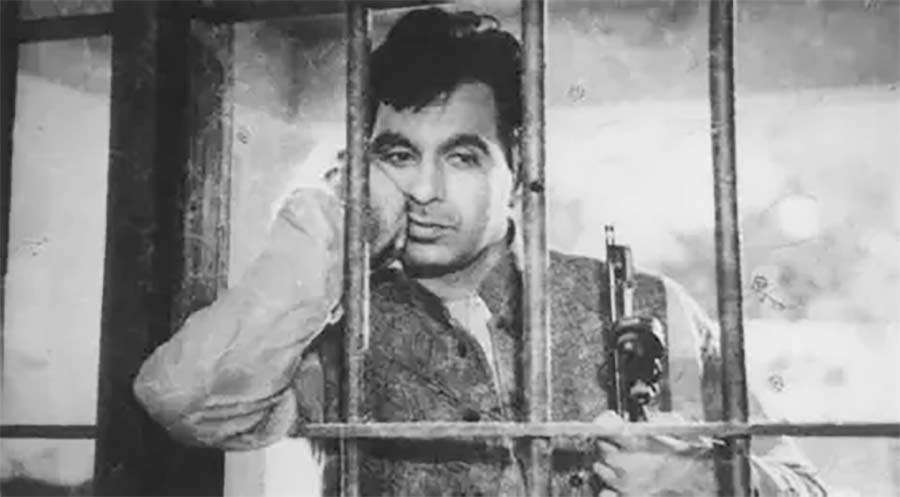
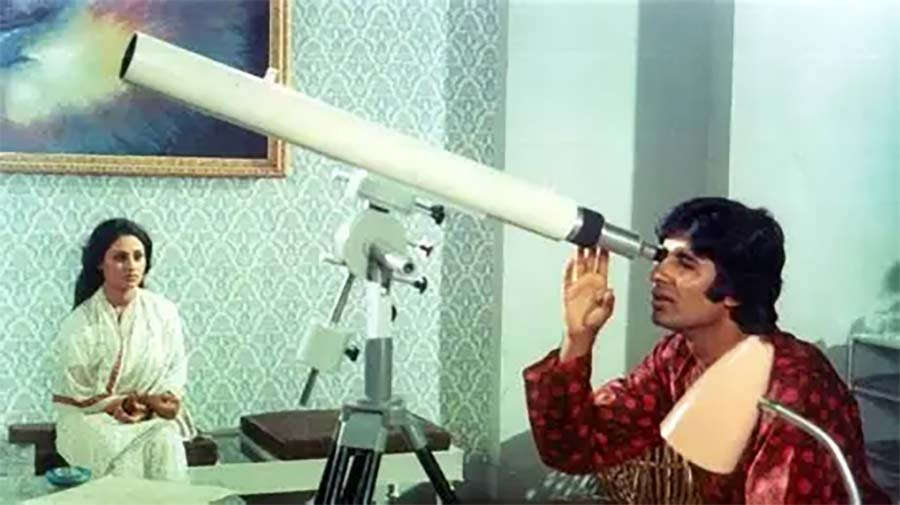
Anand is such beautifully written, directed and acted that it makes space in your heart. Showing us how good he was, Amitabh Bachchan as young doctor Bhaskar is a mix of idealism and realism. He becomes friends with his patient Anand, who’s terminally ill. Anand dies, leaving behind memories of happy times. He shows them all about seizing the moment, about forgetting your pain and living the moment.
As a cinema lover, if you haven’t seen Hrishida’s earlier oeuvre like Musafir (1957), Anupama (1966) and Satyakam (1969), you ain’t seen nothing yet. Hrishida has his flaws but through it all his humanism and outstanding insights into the foibles of human nature come shining through. You can see it in his weaker but utterly delicious films like Biwi Aur Makaan (1966), Mem Didi (1961), and Majhli Didi (1967).
I consider it my good fortune to have met Hrishida a few times during my rookie years. Despite failing health, he was an expert raconteur and told me about the halcyon glory days. For that, I shall always be grateful.
I’ve lost count of the times I’ve seen Anand and Mili, and every single viewing I’ve wept. Anand and Mili were perhaps two sides of the same coin. Both protagonists lit a candle and refused to curse the darkness. There is so much wisdom in both these films; there is experience, and there’s that one quality we are losing out on: goodness. Hrishida showed us the good face of the movies, and for that, we are forever indebted.
While I shall always hold Guru Dutt and Vijay Anand in the highest estimation, but Hrishida was my absolute favourite. It is his films, be it Khoobsurat or Bemisal, Abhimaan or Anand, that I keep revisiting the most. Even his weaker films like Alaap (1977), Jurmana, and Namak Haraam have such a resonance even to date.
Also Read: Editor’s Take: The Last Great Karanavar, a Tribute to Thilakan’s Singular Genius