MUMBAI: On the day the 2024 Maharashtra assembly election results were announced, Ajit Pawar made an early phone call to Devendra Fadnavis, who was set to become chief minister.
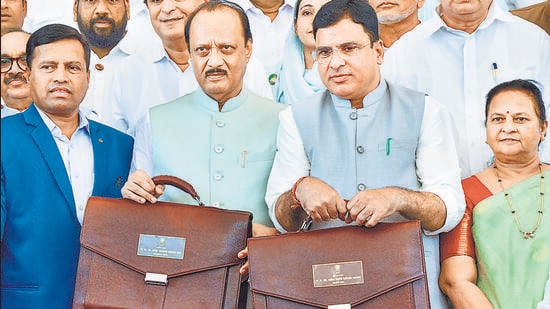
Ajit, then the finance and deputy chief minister in the outgoing Mahayuti government, raised just one issue in that conversation: the populist Ladki Bahin scheme, introduced with an eye on the vote bank, and the urgent need to take steps to minimise its burden on the state exchequer. As FM, Ajit most felt the weight of the scheme’s annual ₹46,000 crore, a staggering sum that was unsustainable for Maharashtra’s finances.
Ajit, who was poised to present his 12th budget next month, was known for his resistance to fiscal indiscipline. He did not shy away from taking tough decisions, curbing expenditure, and rejecting proposals that he believed were not in the state’s long-term interest.
When the vote-catching Ladki Bahin scheme was proposed ahead of the 2024 assembly polls, Ajit had initially opposed it, warning that it would consume over 10% of the state’s revenue. The finance department had also recorded adverse remarks, flagging concerns of fiscal indiscipline. However, once Ajit was convinced that the scheme was politically inevitable, he accepted the decision and focused on ensuring that its impact on state finances was minimised. Chief minister Devendra Fadnavis recounted the episode of Pawar’s telephone discussing Ladki Bahin during his first press conference after the election results.
Former minister of state for finance Rajendra Mulak, who worked closely with Ajit between 2010 and 2014, described him as a finance minister who consistently prioritised public interest and asset creation. “Every rupee generated was expected to translate into asset creation,” he said.
Mulak recalled that budget preparations would begin nearly two months in advance with consultations involving trade and commerce bodies. “Finance ministers are often seen as villains because they have to say no,” he said. “We were no exception. But Ajit Pawar always evaluated proposals on parameters such as public interest, revenue generation and public perception before giving approvals.”
According to Mulak, Ajit had an exceptional grasp of files and an ability to read between the lines. He ensured a balance between capital expenditure, asset creation and social-sector spending while prioritising allocations. “Once he was convinced something needed to be done, he ensured it was done. But he never hesitated to admit a mistake,” Mulak said, narrating an incident where Ajit accepted an error after a detailed discussion, and withdrew a proposed order.
Former additional chief secretary of the finance department Manoj Saunik, who worked with Ajit for several years, said the late leader had an unmatched awareness of developments across the state. “He was never afraid of taking tough decisions and had a way of communicating them so that they were accepted,” he said. “He did what his conscience dictated.”
Saunik recalled Ajit’s tenure as finance minister during the Covid-19 pandemic under the Maharashtra Vikas Aghadi government. “With revenues dropping sharply, he did not hesitate to cut expenditure while simultaneously increasing allocations for healthcare,” he said. Officials noted that when state revenues declined by nearly 40 per cent during the pandemic, Pawar’s decisions, including reducing stamp duty on property registrations and permitting home delivery of liquor, helped stabilise and augment revenues.
Highlighting Pawar’s alertness to governance issues, an official recalled that he had rejected a proposal for a new agricultural college nearly a decade ago. “He questioned the need for a new college when the existing 46 colleges did not have adequate student enrolment,” the official said. More recently, Pawar had directed the finance department to examine cases of ‘bogus’ PhD students who continued to draw scholarships for years without completing their degrees.
While he consciously rejected unnecessary expenditure, Ajit also ensured that he himself was not accused of being exorbitant. When he was criticised for spending a few lakhs of rupees on the ‘tulsi vrindavan’ during the makeover of his official bungalow, Devgiri, he immediately declared that he would pay for it himself and issued a cheque. In 2021, when he was deputy CM in the MVA government, the BJP lambasted him for issuing a tender of ₹5.9 crore to appoint a PR agency—an appointment that was set in motion despite the drastic drop in revenue generation in the Covid-19 lockdown. To put a full stop to the controversy, Ajit promptly announced the cancellation of the tender.