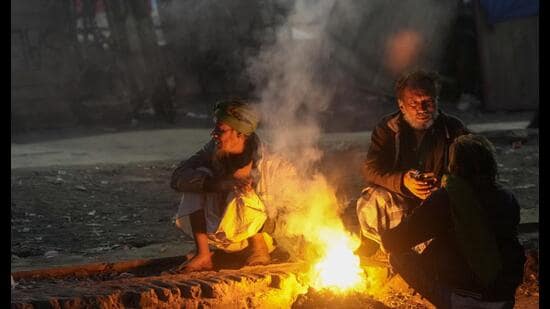
Residents of Gurugram awoke to a piercing and historic cold on Monday morning as the city’s temperature plunged to a near-freezing 0.6 degrees Celsius (°C) – a low unmatched in nearly 50 years and one that made the city colder than several popular Himalayan hill stations.
According to data from the India Meteorological Department’s (IMD) automatic weather station (AWS), Monday morning’s reading matched the minimum of 0.6°C last recorded on January 22, 1977.
Gurugram’s AWS has only recorded temperatures under 0.6°C thrice before – it recorded an all-time low of –0.4°C on December 5, 1966; the mercury touched 0°C on January 11, 1970; while it was 0.3°C on January 22, 1979, according to data shared by IMD.
For perspective, Monday’s reading of 0.6°C was significantly lower than minima recorded in Kangra and Palampur, Himachal Pradesh (3°C), Jammu (3.4°C), and the Uttarakhand hill towns of Mukteshwar and Jollygrant (4.1°C) and Tehri (4.1°C).
Meteorologists attributed the sharp drop to persistent cold northwesterly winds and clear night skies, which facilitated rapid radiative cooling. IMD has extended an orange alert for the district until January 13, forecasting dry conditions and no immediate relief till the weekend. “The weather is likely to remain dry until Friday this week, with no expectations of rain in the region,” the senior official added.
The severity of the cold was visibly apparent in the city’s outskirts, where a layer of frost – locally called pala – covered crops, grasslands, and car windshields in the early hours.
Jeeva Thavasiraj, 22, a resident of Sector 66, said that he never experienced a freezing weather like this in his home state Tamil Nadu. “Even stepping out early in the morning feels unbearable, something we usually associate with hill stations, not NCR cities. As a site engineer, our feet become extremely cold even after wearing heavy safety shoes,” Jeewa said.
Sunita Devi, 59, a resident of Sohna, said the cold left visible signs on vehicles and fields. “I travel to Gurugram daily for work. The elevated road had poor visibility during the early hours. Additionally, there was a thin layer of frost on our bus’s windshield and on the crops in nearby fields. The bus had to run below the normal speed to navigate through the dense fog safely,” Devi said.
IMD has issued detailed advisories, warning of heightened health risks, especially for the elderly, children, and those with respiratory or cardiovascular conditions. “Prolonged exposure can lead to frostbite, flu, and aggravated respiratory illnesses like asthma and bronchitis. Shivering is the first sign of the body losing heat and should not be ignored,” a senior IMD official cautioned.
Commuters have been alerted to difficult driving conditions due to dense fog, which is predicted during late-night and early morning hours. The advisory warns of reduced visibility leading to slower traffic, increased collision risks, and possible disruptions to power lines. Authorities advise using fog lights, planning long journeys in advance, and exercising extreme caution on roads.
To cope with the severe conditions, experts recommend moisturizing skin, consuming vitamin-C-rich fruits and vegetables, drinking warm fluids, and ensuring proper ventilation when using indoor heaters to prevent toxic fume inhalation.
The maximum temperature on Monday reached only 19°C, indicating a stark and persistent diurnal cold wave. With the forecast predicting similar conditions for the next few days, Gurugram’s record-breaking chill is a stark reminder of the intensifying winter extremes affecting India’s northern plains.