The Directorate General of Shipping (DG Shipping) has flagged a growing humanitarian concern, warning that essential supplies on several ships stranded in the Persian Gulf are running critically low, amid escalating tensions that have disrupted commercial traffic through the Strait of Hormuz.
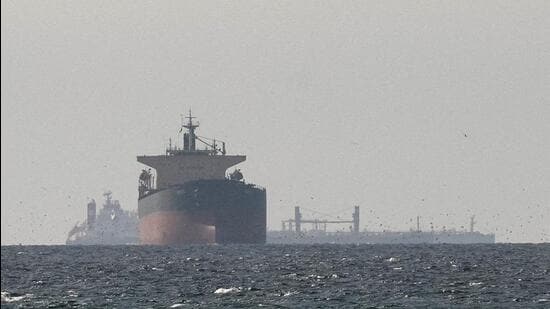
The narrow waterway handles nearly a fifth of global oil trade, and the ongoing conflict has severely curtailed vessel movement, leaving hundreds of ships unable to transit the crucial chokepoint.
Check latest updates on US-Iran conflict
According to sources, drinking water is among the supplies nearing depletion on some vessels. DG Shipping has directed shipowners and managers to urgently replenish stocks, while seafarers’ unions have urged the central government to intervene.
A report prepared by the Mumbai-based directorate said inputs from several vessels indicate that fresh water and provisions have fallen to critically low levels. Ship managers have been advised to arrange urgent replenishment, as supplies may not last if delays continue for a few more days.
The report estimates that around 23,000 Indian seafarers are currently stranded in the region. Of these, 633 are on Indian-flagged vessels—610 in the Persian Gulf and 23 in the Gulf of Oman. As of Friday, 513 seafarers had been evacuated by shipping companies.
Two vessels—a crude oil tanker and an LNG carrier—are ready for immediate evacuation from the Strait of Hormuz under naval escort, the report said. Last week, LPG carriers Shivalik and Nanda Devi reached the ports of Mundra and OPL Vadinar, respectively.
Also Read: Trump rules out ceasefire with Iran; says Strait of Hormuz will ‘open itself’ eventually
According to the report, 22 Indian vessels are currently in the Persian Gulf, west of the strait: one in the Gulf of Oman, two in the Gulf of Aden, and one in the Red Sea. Six of these belong to the Shipping Corporation of India, including four crude oil tankers, one LNG carrier and one bulk carrier.
DG Shipping has identified 22 vessels for evacuation, while 20 have been classified as critical to India’s energy security, including three LNG carriers, 10 LPG carriers and seven crude oil tankers. Two Indian-flagged container vessels have also been prioritised for safe passage.
The total cargo onboard these vessels is estimated at 215,000 metric tonnes of LNG, 321,288 metric tonnes of LPG, and 1.67 million metric tonnes of crude oil.
The shipping ministry is coordinating with the Directorate of Naval Operations, the Ministry of Petroleum and Natural Gas, and the Information Fusion Centre–Indian Ocean Region to facilitate evacuation and ensure safe passage.
While no Indian-flagged vessel has been attacked so far, the report notes eight incidents involving foreign-flagged ships with Indian crew, resulting in three deaths, four injuries and one person missing.
The crisis has also disrupted port operations in India. Most ports have temporarily halted acceptance of export cargo bound for the Gulf to prevent congestion. Authorities are considering waivers on charges and have extended storage leases for stranded cargo.
Currently, 39,133 TEUs of container cargo, 0.03 million tonnes of dry bulk, and 1,789 TEUs of perishable goods are stranded or awaiting evacuation at major ports. A TEU (Twenty-foot Equivalent Unit) is a standardised unit of measurement in shipping, representing the capacity of a standard 20-foot container.