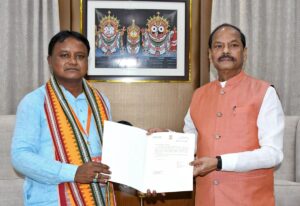
 Mohan Charan Majhi: The Tribal Leader Transforming Odisha
Mohan Charan Majhi, a four-time Member of the Legislative Assembly (MLA) in Odisha, has become a significant figure in the state’s political landscape. His recent appointment as the Chief Minister of Odisha marks a historic moment, as he is the first from the Bharatiya Janata Party (BJP) to hold this position in the state. Majhi’s ascent to this role is a testament to his dedication, hard work, and deep-rooted connections within his community.
Early Life and Background
Majhi hails from Raikala village in the mineral-rich Keonjhar district of Odisha. As a member of the Santali tribe, one of India’s prominent indigenous groups, his background is steeped in the traditions and challenges of tribal life. His early years in the village, surrounded by the lush forests and mining activities of Keonjhar, instilled in him a deep understanding of the socio-economic issues faced by tribal communities.
Political Journey
Majhi’s political journey began with his association with the Rashtriya Swayamsevak Sangh (RSS), a right-wing Hindu nationalist organization. His work with the RSS provided him with a strong ideological foundation and a network of support that proved crucial in his political career. His grassroots approach and ability to connect with the local populace earned him the respect and trust of his community.
Elected as an MLA four times, Majhi’s tenure in the Odisha Legislative Assembly from 2019 to 2024 was particularly notable. During this period, he introduced seven significant bills, including one aimed at the protection of whistle-blowers. His legislative work demonstrated his commitment to transparency, accountability, and the welfare of the people.
Chief Minister of Odisha
On June 12, 2024, Majhi was sworn in as the Chief Minister of Odisha, a role that symbolizes the culmination of the BJP’s long struggle for political dominance in the state. His appointment marks a new era for Odisha, with expectations that his leadership will bring about significant changes, particularly for the tribal and rural communities.
Focus on Tribal Welfare
One of Majhi’s key areas of focus has always been the welfare of tribal communities. Having grown up in a tribal village, he is acutely aware of the issues such as lack of access to quality education, healthcare, and economic opportunities that plague these regions. His administration is expected to prioritize policies that address these challenges.
Majhi has been a vocal advocate for the rights and development of tribal people. His participation in village functions and constant engagement with local issues have made him a beloved figure among his constituents. He believes that sustainable development and empowerment of tribal communities are essential for the overall progress of Odisha.
Legislative Contributions
Majhi’s legislative contributions have been significant. The bills he introduced reflect his focus on social justice, transparency, and rural development. The whistle-blower protection bill, for instance, highlights his commitment to ensuring that corruption is curbed and that individuals who expose malpractices are safeguarded. This bill is particularly relevant in a state where mining and industrial activities often lead to disputes and allegations of corruption.
Vision for Odisha
As Chief Minister, Majhi envisions a transformative agenda for Odisha. His goals include improving infrastructure, enhancing educational and healthcare facilities, and promoting economic development. He aims to harness the state’s rich mineral resources in a manner that benefits the local population and ensures environmental sustainability.
Challenges Ahead
Majhi’s leadership comes with its set of challenges. Odisha’s diverse socio-economic landscape requires nuanced and inclusive policies. The state has a mix of urban and rural areas, with varying needs and priorities. Balancing industrial growth with environmental conservation, addressing unemployment, and ensuring equitable development are some of the key issues his administration will need to tackle.
Moreover, Majhi will have to navigate the complexities of coalition politics and manage relationships with various stakeholders, including opposition parties, industry leaders, and social activists. His ability to build consensus and implement effective policies will be critical to his success as Chief Minister.
Conclusion
Mohan Charan Majhi’s journey from a tribal village in Keonjhar to the Chief Minister’s office is a story of resilience, dedication, and unwavering commitment to public service. His leadership represents a beacon of hope for many in Odisha, particularly the tribal communities who have long felt marginalized. As he steps into his new role, the people of Odisha look forward to a future marked by inclusive growth, transparency, and social justice under his stewardship.