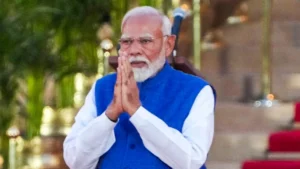
 Modi 3.0: A New Cabinet for a Historic Third Term
Prime Minister Narendra Modi has taken oath for a historic third term, marking a significant moment in Indian politics. However, the new Modi 3.0 cabinet has seen the exclusion of some prominent figures, including Smriti Irani, Rajeev Chandrasekhar, and Anurag Singh Thakur. This reshuffle indicates a strategic shift in the government’s approach as it embarks on this new term.
Smriti Irani, who previously held the positions of Minister of Women and Child Development and Minister of Minority Affairs, lost her seat in Amethi to KL Sharma of the Congress. Despite her high-profile status and previous successes, her exclusion from the new cabinet reflects the electoral defeat and the government’s decision to bring new faces into these key roles. Similarly, Rajeev Chandrasekhar, who served as the Minister of State for Electronics and Information Technology, failed to secure his seat in Thiruvananthapuram against Shashi Tharoor. His exclusion highlights the political shifts and the importance of election outcomes in determining cabinet positions.
Anurag Singh Thakur, who has been a consistent figure in Modi’s previous cabinets and won from Himachal’s Hamirpur for a record fifth term, was also dropped. Despite his victory and his roles as Minister of Information and Broadcasting and Minister of Youth Affairs and Sports, his exclusion indicates a possible shift in priorities within the cabinet structure. The new cabinet, known as Modi 3.0, comprises 72 ministers, including notable leaders such as Amit Shah, Rajnath Singh, Nirmala Sitharaman, S Jaishankar, Nitin Gadkari, and Ashwini Vaishnaw.
The reshuffle also saw the exclusion of other leaders such as Nisith Pramanik, Ajay Mishra Teni, Bharti Pawar, Ashwini Choubey, Bhagwat Karat, and Arjun Munda. General VK Singh and Meenakshi Lekhi were also not given tickets this time. Arjun Munda, who was the Minister of Agriculture and Farmers’ Welfare and Tribal Affairs, lost his seat in Khunti to Congress leader Kali Charan Munda. This loss, along with those of other key figures, suggests a significant realignment within the BJP’s strategy and representation.
Nisith Pramanik, who served as the Minister of State for Home Affairs, was dropped after losing to TMC’s Jagadish Chandra Barma Basunia in North Bengal’s Cooch Behar. Ajay Mishra Teni, who had come under scrutiny for his involvement in the farmers’ protest violence in Lakhimpur Kheri, lost to Samajwadi Party’s Utkarsh Verma and was also excluded from the new cabinet. These changes underscore the impact of electoral outcomes and public perception on the composition of the cabinet.
The new cabinet formation was accompanied by a grand oath-taking ceremony, attended by numerous guests, marking the beginning of Modi’s historic third term. This event set the stage for what promises to be a significant phase in Indian politics. Alongside the political developments, the financial markets also responded to the changes. Shares of Suzlon Energy reached Rs 50, with analysts suggesting new price targets. The Enforcement Directorate brought to light allegations of Rs 100 crore kickbacks by K Kavitha to AAP leaders, adding another layer of complexity to the political landscape.
Prashant Kishor advised the BJP to focus on retaining at least two out of three states in upcoming assembly polls, highlighting the ongoing strategic considerations within the party. Additionally, the struggles of engineering graduates to find work due to skill mismatches were discussed, pointing to broader socio-economic issues that the new government will need to address.
The top stories also covered insights into post-election stock picks by top fund managers and Adani Airport Holdings’ report of handling over 1 million tonnes of cargo in FY24, marking a 7% year-on-year growth. These developments illustrate the interconnected nature of political decisions and economic outcomes. The new cabinet’s composition and the strategic shifts it represents will play a crucial role in shaping India’s future policies and directions, impacting both the political and economic spheres of the country.