An art project made me think about the extinction of modernism in the Delhi house. That is the thing with art – it returns you to your present and makes you wonder how you got here.
The artist, Kulpreet Singh from Patiala, presented an extinction archive that examined the Green Revolution and its impact on the land. Using soot from crop burning, he built a repository of everything the intensive Green Revolution erased. From animals to fungi, each critical to the natural life of the land, once lost left it surviving on life support.
The installation referenced over 900 endangered animal, fungal, and plant species drawn from the International Union for Conservation of Nature’s Red List of Threatened Species. These species critical to agriculture were lost because we believed evolving cultivation to the revolution will re-invent our food systems.
It made me think: do houses still offer shelter, or do they now demand life support? As pre-independent India was shaping its future, modernism came to the rescue. With frugality at its core, concrete forged new iconographies rooted in climate awareness.
Also Read | Delhi’s Houses: The Jains of Daryaganj
This modernism understood that the house had to support life, not demand it. But as time passed, and technology and aspiration expanded, houses became consumers. With verticality and amenities, they are no longer as climate aware as they once were.
Delhi houses once understood that the city had five seasons. Spring unfolded in the garden. Summer belonged to the cooler. Verandahs held the monsoon and tea. Windows with grills and mosquito nets filtered in the cardamom-scented air of Diwali. Rooftops were for winter, while floors turned into tapestries of drying chillies, fermenting pickles, and roasted peanuts. These everyday archives have largely ceased to exist, surviving only in fragments in a grandmother’s home, where continuity briefly lingers before fading into memory.
This now feels like a collective obituary for the companions of a modern Delhi house. In no particular order, here are a few of those lost elements.
Also Read | The first house in Delhi’s Kautilya Marg and its Bauhaus history
The desert cooler
Lined with khus, it scented the house as water moved through it. The couch beside it was the most coveted seat, often reserved for the father returning from work. Its steady hum was the sound the house slept to.
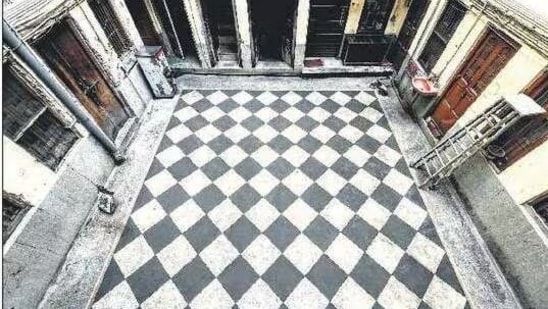
Terrazzo flooring
This pattern was once everywhere. Its ability to mould into intricate patterns using concrete, stone chips, and glass made it as expressive as a carpet.
Entrances and drawing rooms carried vibrant terrazzo designs, becoming the heart of the home’s aesthetic. After liberalisation in the 1990s, vitrified tiles replaced it, and Delhi has never quite been the same.
Sewing machines
These were beautiful objects in iron and wood, especially the Singer models. They held a central place in the home, reflecting a time when sewing was common. Today, they survive as repurposed tables and lamps, their original function mostly forgotten.
Fireplaces
Once common in North Indian homes post Independence, fireplaces were among the first to fade, shifting from necessity to aesthetic relic, and eventually disappearing.
Builders now rarely include them, citing lost techniques and practical concerns.
Gardens
Rarely a part of ground-level plans now. Contemporary Delhi houses are built on stilts, with the ground floor reserved for parking. In that shift, the garden disappeared. A place where children once played with water and mud is now a parking lot. Driveways that hosted cricket matches are clogged with cars.
Rooftops
Winters were lived here. For many Delhi residents, winter opened the outdoors, making afternoon siestas on a khaat irresistible. Kitchens extended upward, with small experiments and seasonal preparations taking place under the open sky. It remains one of the few places where one can still feel the sky.
Courtyards
Once the heart of the house, they connected rooms and floors, allowing voices and lives to travel across space. Over time, they shifted to the back, reduced in scale and significance. Their disappearance reflects a growing desire for privacy, a social shift that reconfigured domestic life.
There have been many such elements in the Delhi house that have disappeared without leaving a trace, as if they were never there. The contemporary Delhi house rarely speaks to the localised regionalism that once defined it. Weather, habits, food, textiles, materials, and routines shaped its form. Delhi had a signature rooted in lived realities.
As I record this extinction archive of modernism in the Delhi house, I begin to understand the sadness Kulpreet Singh may have felt while building his own archive. I think back to a time when the garden told me it would rain, not my phone. I think back to the simplicity of living, the grounding it had, and the relics it has now left behind. This archive is not just an obituary. It is also a record of how we lived, and perhaps a reminder of how we could live again.
Anica Mann works on archaeology and contemporary art in Delhi. The views expressed are personal