MUMBAI: Properly speaking, before we live in cities, we live in neighbourhoods. The neighbourhood is our first visceral encounter with the city. It is where we touch it. It is where the big unwieldy abstraction of the city assumes flesh and blood, where it shapes our dailiness. We don’t simply live in Delhi, or Mumbai, or Lucknow, or Bareilly. Instead, we live in Kamla Nagar, or Kurla, or Telibagh, or Civil Lines. It is the neighbourhood which performs the alchemy of turning the rhetoric of the city into lived experience, one that can be both balm and brutality.
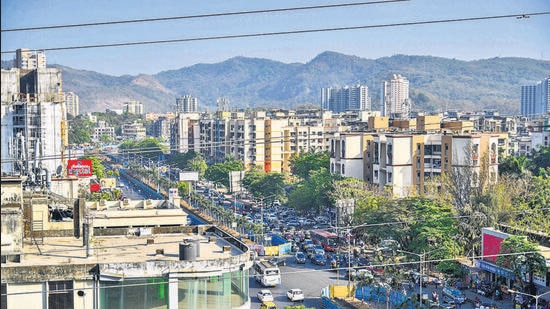
I am about 10 months old in my neighbourhood in Mira Road. After spending about two decades in Delhi, moving to a new city is a bit like walking on stilts. You seem to dizzily hover above the ground, taking giant strides without fully knowing the land you stand on. But in these past few months, what has gradually inched me closer, is the slowly but surely growing familiarity with the streets and corners of my neighbourhood, with its ecology that is both spectacular and fragile, and with its people, those utterly complex carriers of pleasures and prejudices. In these 10 months, I took 10 snapshots of the neighbourhood.
One. When looking for a 1BHK, shopping around different builders’ projects by the Mira-Bhayandar road, the young salesman proudly offers the housing society to me as ‘non-cosmo’. He implies it’s where only people of my religion live. I’d never heard the phrase used like this before. A neighbourhood’s real promise is, in its root sense, of people who dwell nearby (neah is near, gebur is dweller). And here, a man imagines that promise as threat, and offers me a home as some sort of deft engineering of proximities.
Two. Scootering one January afternoon, crossing the MIDC road, I am brought to a sudden standstill because of the most unreal crown of a pink-trumpet tree in full bloom. The asphalt of the road is carpeted with newly fallen flowers being mauled by tires. I register the tree as a new node of the neighbourhood.
Three. Walking down Shanti Nagar market at night, off the road named after Babasaheb, with stalls after tubelit stalls of earrings and hairclips and shirts and socks, all along the way I hear the handsome chords of Marathi, Gujarati, Urdu and Hindi, all with frequent smatterings of English. A neighbourhood is the name we give to the nearness of languages we know and the ones we wish to know.
Four. The Virar Fast entering Mira Road, after Dahisar, and the landscape neatly combing into the jagged apartment blocks on the East, and the quiet expanse of mangroves and salt-pans on the West.
Five. Late evening search for the right kind of crochet threads for my hexagenarian mother’s new online business in the lanes of Naya Nagar, being directed by the passers-by to shops under the blue-lit minaret of the local Jama Masjid Al Shams. The overpowering sense, yet again, that we flourish as a people in proximity with each other, not in siloes.
Six. Standing on the edge of the Bhayandar jetty, almost touching the waters of Vasai creek, people and scooters rolling on and off the ferries, and a cacophony of gulls congregating above a fish basket. The friendly neighbourhood reminder that a city is a relatively recent built-up surprise in the middle of elemental and older inhabitants, creeks and birds, and those who fish in the creeks and feed the birds.
Seven. My six-year-old nephew, who lives in the building next to mine, playing on the podium, spots me stepping out, rushes towards the railing, and thrusts his hands through it to wave the most enthusiastic ‘Hi’ ever waved in history. The neighbourhood is a cluster of core memories.
Eight. A mushaira on the NH School grounds, a stone’s throw from my house. I arrive too early, long before the chief guest, the poet and politician Imran Pratapgarhi, and sit among the first hundred or so listeners. The poets both regale us and hector us out of our initial hesitation with wah-wahs. The crowds start swelling. Before I leave, couplets celebrating harmony between all creeds fill the air.
Nine. My father and I practise small Marathi sentences, using a combination of Google translate and what we hear on the streets and from neighbours, and on youtube. One of the first sentences we practice: Mi Marāṭhī shikṇyāchā prayatna kart āhe. I am trying to learn Marathi.
Ten. Returning from Kanheri, the Buddhist caves and monuments cut into the black basalt outcrop in the Sanjay Gandhi National Park, I read Jane Hirshfield’s translation of Mirabai: “Love has stained my body / to the color of the One Who Holds Up Mountains.” Mirabai. I begin imagining etymologies for my neighbourhood.